
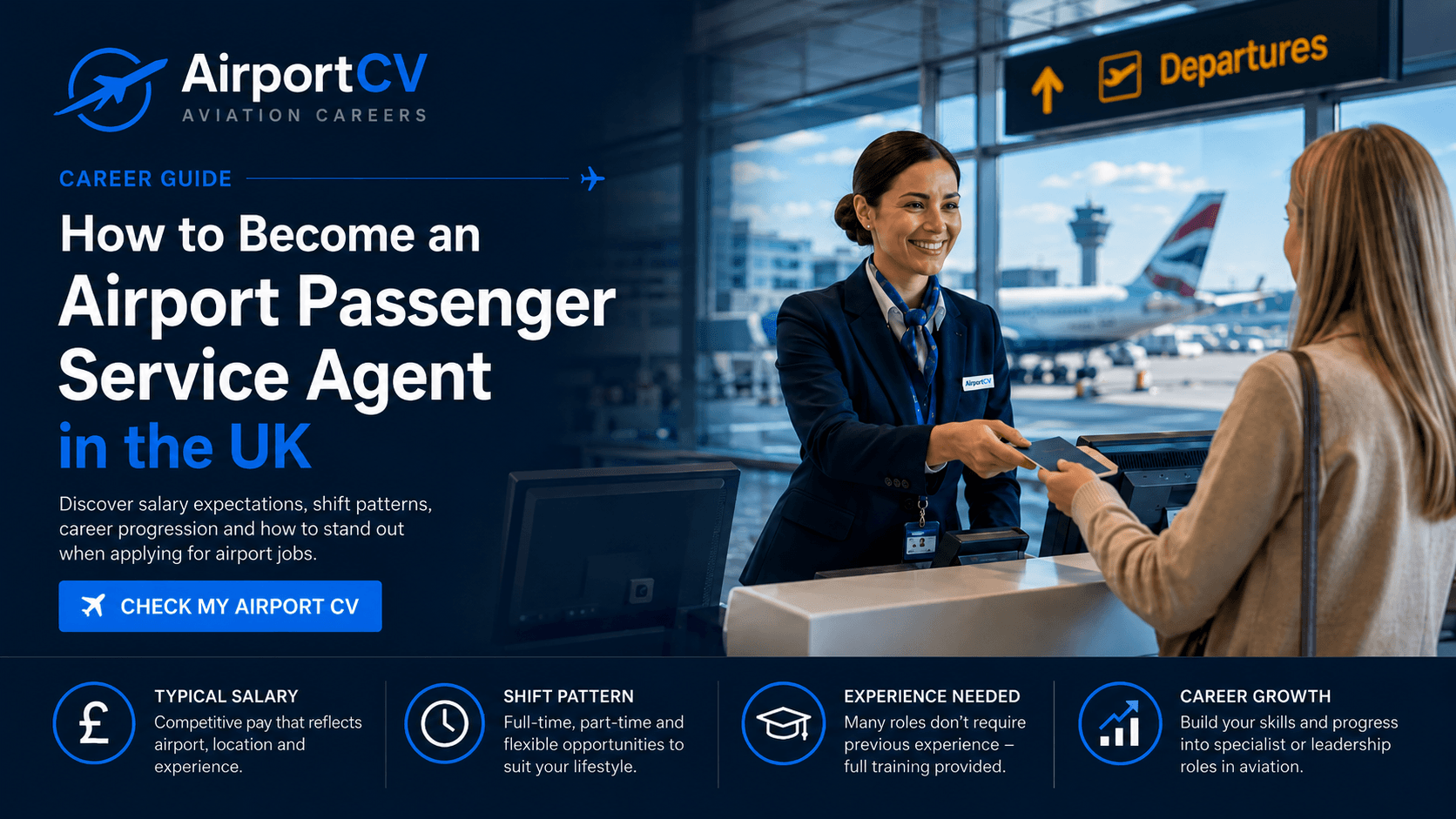
Passenger service roles can be a strong entry route into airport and airline work, especially for people with customer service, retail, hospitality, call centre, travel, care or front-of-house experience.
Salary context
NCS lists airline customer service agent pay from £25,000 starter to £30,000 experienced.
Typical hours
NCS lists typical hours as 37 to 40 per week, with shift work possible.
Sector data
CAA publishes official UK airport statistics and airport traffic data.
What does a passenger service agent do?
Passenger service agents, also described by the National Careers Service as airline customer service agents or airline passenger service agents, help passengers and their luggage get checked in correctly and support boarding at the right time.
In practice, this can include check-in support, boarding gate duties, passenger enquiries, disruption support and helping travellers understand what they need to do next.
Salary and working hours
The National Careers Service lists airline customer service agent pay as approximately £25,000 starter to £30,000 experienced. It also lists typical hours as 37 to 40 hours per week, with evenings, weekends and bank holidays possible on shifts.
Real pay can vary depending on airport, employer, contract type, location, shift pattern, overtime, allowances and level of responsibility. Treat salary figures as guidance, not a guarantee.
Who this role can suit
Aviation beginners
A practical entry point for people who want airport or airline experience.
Customer service workers
Retail, hospitality, call centre and front-desk skills can transfer well.
Students and part-time workers
Some airport employers offer shift patterns, but availability requirements vary.
Career changers
A useful route for people moving from public-facing roles into aviation.
Skills recruiters usually look for
Employers usually want evidence that you can work with people, follow procedures, stay calm under pressure and communicate clearly. For this type of role, your CV should show examples, not just a list of soft skills.
Common CV mistakes
Too generic
A CV that could apply to any job usually feels weaker than one focused on airport service.
No examples
Saying “good communication” is less effective than showing where you handled customers or solved problems.
Missing shift readiness
Airport roles often involve early starts, late finishes, weekends or bank holidays.
Possible progression routes
Progression depends on employer structure, performance, training, airport size and available vacancies. A realistic pathway may move from passenger service work into senior agent, team leader, supervisor, duty management or wider airport operations roles.
Before you apply, check your aviation CV
Many candidates already have useful experience. The challenge is presenting it in a way that matches passenger service, safety, teamwork and customer-care expectations.